Ever wonder why the economy booms or busts?
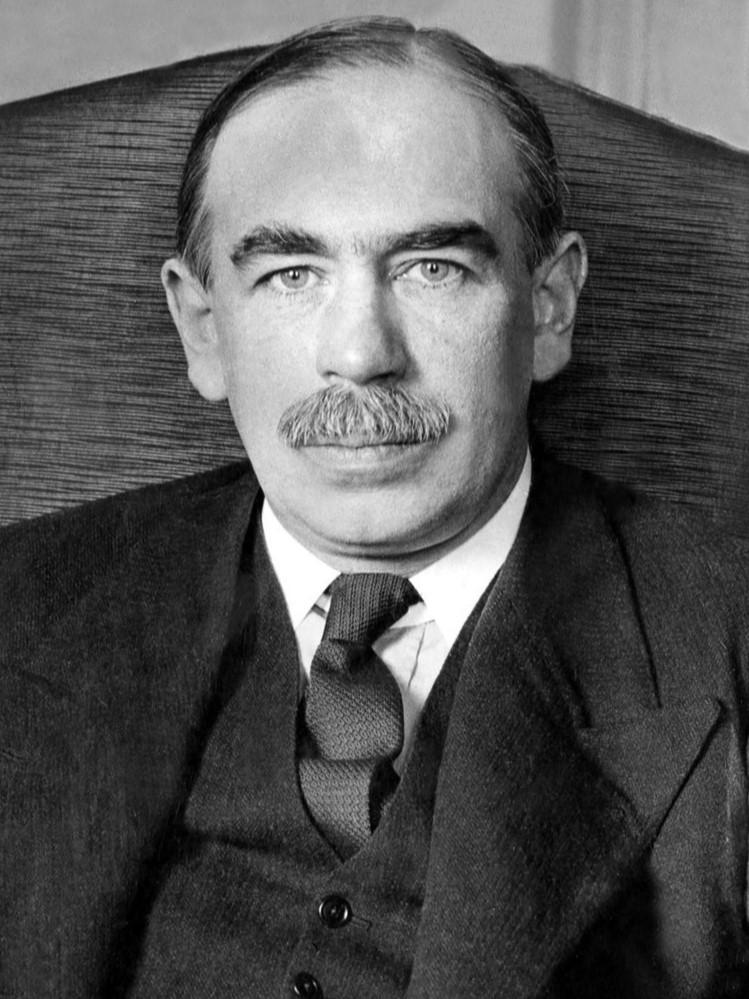
Image: Unknown, dedicated to Bettmann Archive, Public domain, via Wikimedia Commons
Post-Keynesian economics
Ever wonder why the economy booms or busts?
Imagine you're at a party where everyone suddenly decides to spend more money. The party gets crowded, and the atmosphere becomes lively. But then, people start saving more and spending less. The party slowly empties out, and the mood becomes dull.
Keynesian economics suggests that when people spend more, the economy thrives, just like a crowded party. But when people save and spend less, the economy slows down, like an emptying party. The key idea is that people's spending (aggregate demand) drives economic activity.
Example
At the party, if 100 people spend $10 each, total spending is $1000 (100×$10). But if only 50 people spend $10 each, total spending drops to $500 (50×$10).
Remember this
Remember, the economy's health is largely determined by how much people spend and save.
Text adapted from Wikipedia, licensed under CC BY-SA 4.0.
Related concepts
Economics
Keynesian economics emphasizes aggregate demand as a driver of employment
Animal spirits (Keynes)
How do emotions drive our spending habits?
New Keynesian economics
Ever wondered why a small spending boost can lead to a big economic boom?
Paradox of thrift
Paradox of thrift: individual saving decreases aggregate demand and gross output
The General Theory of Employment, Interest and Money
Ever wonder why holding cash feels safer than investing?
John Maynard Keynes
Keynes coined the phrase "In the long run, we are all dead."
Educational content, not financial advice.
Swipe through more Finance concepts
Open Pocket Polymath