Ever wondered why a small spending boost can lead to a big economic boom?
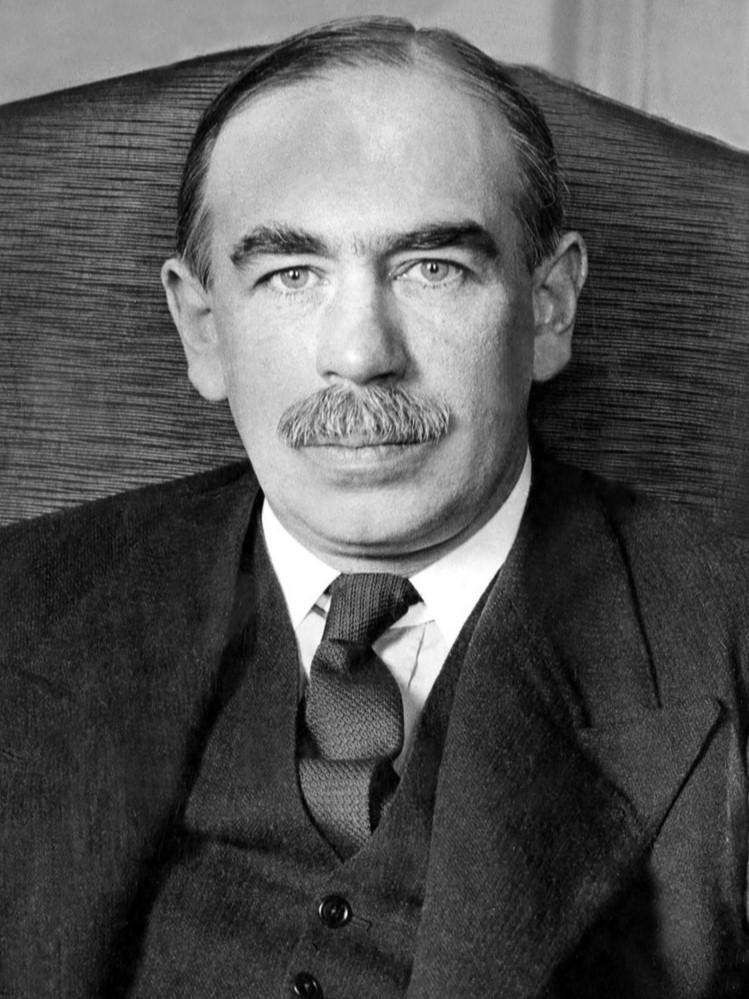
Image: Unknown, dedicated to Bettmann Archive, Public domain, via Wikimedia Commons
New Keynesian economics
Ever wondered why a small spending boost can lead to a big economic boom?
Imagine you're at a party where everyone starts dancing when one person jumps up. The party gets livelier as more people join in, right?
The party's energy is like an economy. When one person spends money (jumps up), it encourages others to spend too (dance), creating a chain reaction that boosts the whole party (economy). This chain reaction is called the 'multiplier effect'.
Example
If one person spends 100 at the party, and each subsequent spender spends 50% more, the total spending could spiral up to 300, $450, etc.
Remember this
The 'multiplier effect' shows how initial spending can lead to a larger overall increase in economic activity.
Text adapted from Wikipedia, licensed under CC BY-SA 4.0.
Related concepts
Keynesian economics
$1 of government spending generates more than $1 of GDP
Economics
Keynesian economics emphasizes aggregate demand as a driver of employment
Economic growth
How does more money, people, and machines affect a country's wealth?
Interest rate
Raising interest rates makes borrowing more expensive
Deflation
Deflation increases the real value of money
The General Theory of Employment, Interest and Money
Ever wonder why holding cash feels safer than investing?
Educational content, not financial advice.
Swipe through 100 ML concepts daily
Open Pocket Polymath