Why does a bond's YTM change with market interest rates?
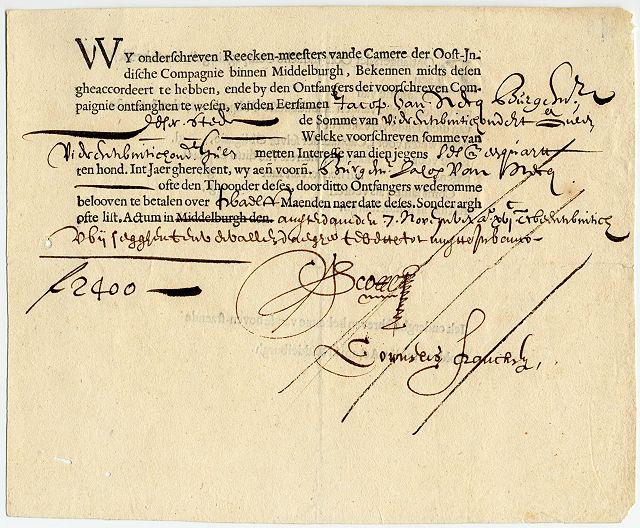
Image: Jacob Cornelisz. van Neck (Necq), Public domain, via Wikimedia Commons
Yield to maturity
Why does a bond's YTM change with market interest rates?
Imagine you're buying a bond for $950 instead of its face value of $1000. You expect to get back $1000 at maturity plus interest payments. If the market suddenly offers higher interest rates for new bonds, what happens to your bond's YTM?
If new bonds are offering higher interest rates, your bond becomes less attractive because it pays less interest. People would demand a higher YTM for your bond to match the new market rates.
Example
Your bond pays 5% interest, but new bonds are paying 6%. Investors would want a higher YTM for your bond to compensate for the lower interest rate.
Remember this
A bond's YTM increases when market interest rates rise, assuming its duration is fixed.
Text adapted from Wikipedia, licensed under CC BY-SA 4.0.
Related concepts
Yield curve
Yield curves show interest rates across different maturities
Inverted yield curve
Short-term rates exceed long-term, often predicts recession
Interest rate
Raising interest rates makes borrowing more expensive
Gaussian measure
How can we predict stock movements?
Rate of return
Ever wondered how fast your money grows with interest?
Organic farming
Yield farming in DeFi provides liquidity to earn interest and token rewards
Educational content, not financial advice.
Swipe through more Finance concepts
Open Pocket Polymath