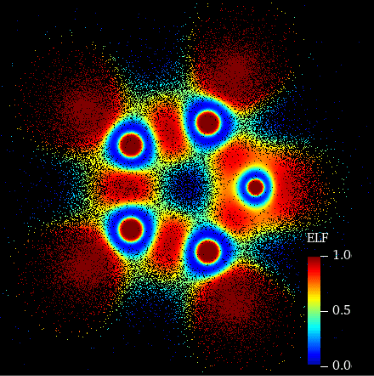
Why do particles sometimes pop in and out of existence?
Image: Silvi, CC BY-SA 4.0, via Wikimedia Commons
Virtual particle
Why do particles sometimes pop in and out of existence?
Imagine you're at a party and suddenly, a balloon pops and disappears in a puff of smoke. You can't see it anymore, but you know it was there just a moment ago.
In the quantum world, particles can momentarily appear and vanish, much like the balloon. These fleeting appearances are called virtual particles, and they help us understand how particles interact at tiny scales.
Example
A virtual particle might briefly come into existence, allowing two particles to "communicate" by exchanging virtual photons, similar to how the balloon's sudden disappearance lets us know it was there before.
Remember this
Virtual particles are like brief flashes of light that help particles "talk" to each other in the quantum realm.
Text adapted from Wikipedia, licensed under CC BY-SA 4.0.
Related concepts
Feynman diagram
Feynman diagrams revolutionized theoretical physics
Schwinger limit
Can light itself create particles?
Mathematical formulation of the Standard Model
Ever wondered why particles behave so strangely?
Pauli exclusion principle
Why can't two electrons crash into the same spot?
Path integral formulation
Feynman showed a particle takes all possible paths simultaneously
Anyon
Can particles behave like magic tricks in physics?
Swipe through more Physics concepts
Open Pocket Polymath