Can machines ever truly think like us?
Turing test
Can machines ever truly think like us?
Imagine you're chatting with someone online, and you can't tell if they're a person or a bot. It's frustrating when you can't tell who's real.
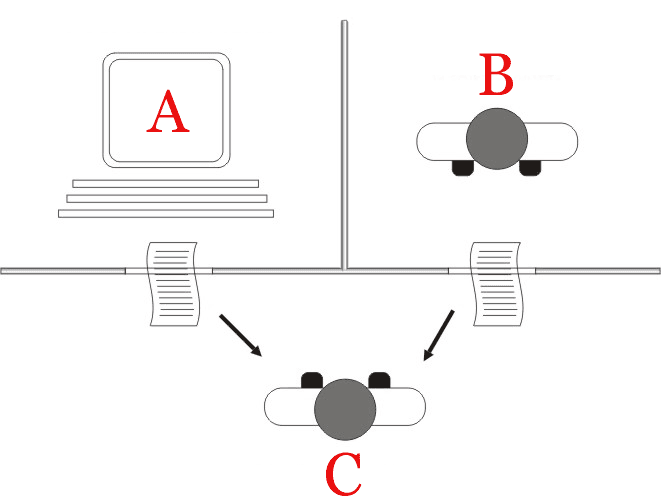
The Turing test checks if a machine can chat so convincingly that you can't tell it's not human. It's about indistinguishability in conversation.
Example
You're talking to someone about your day, and they respond with such natural, human-like language that you can't tell if they're a person or a computer program.
Remember this
The Turing test measures a machine's ability to imitate human conversation convincingly.
Text adapted from Wikipedia, licensed under CC BY-SA 4.0.
Related concepts
Alan Turing: The Enigma
Ever wondered why computers can't solve every problem?
Timeline of quantum computing and communication
Can computers solve problems faster than humans?
Dickinson's dashes do
Dickinson's dashes fracture syntax to mirror the fluidity of thought
Dialectical materialism
How does our mind evolve to understand the world better?
Turing machine
Can a machine think like us?
Artificial general intelligence
Can we teach machines to think like us?
Swipe through 100 ML concepts daily
Open Pocket Polymath