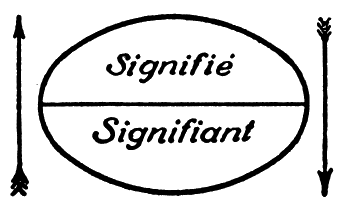
Ever wondered how we understand words beyond just hearing them?
Signified and signifier
Ever wondered how we understand words beyond just hearing them?
Imagine you're reading a sign that says "STOP" at a crosswalk. You instantly understand it means to halt your vehicle, even though you can't see the person writing it.
The sign represents what it's meant to communicate (to stop), while the actual sign (the written word "STOP") is just a visual cue. The technical term for this is the "signifier-signified" relationship.
Example
The word "STOP" (signifier) triggers the meaning to halt (signified).
Remember this
The signifier-signified relationship helps us understand meanings beyond the physical form of words.
Text adapted from Wikipedia, licensed under CC BY-SA 4.0.
Related concepts
Existence of God
Can words mean the same thing every time?
Rimbaud's 'systematic derangement of all the senses' sought
Rimbaud's 'systematic derangement of all the senses' sought a new poetic language through extremity
History of the nude in art
Can symbols in movies unlock hidden meanings like dreams reveal the subconscious?
Dialectical materialism
How does our mind evolve to understand the world better?
Dickinson's dashes do
Dickinson's dashes fracture syntax to mirror the fluidity of thought
Goethe's concept of Bildung means
Goethe's Bildung: Self-cultivation through experience, central to German humanism
Swipe through 100 ML concepts daily
Open Pocket Polymath