Can different systems exhibit the same quantum properties?
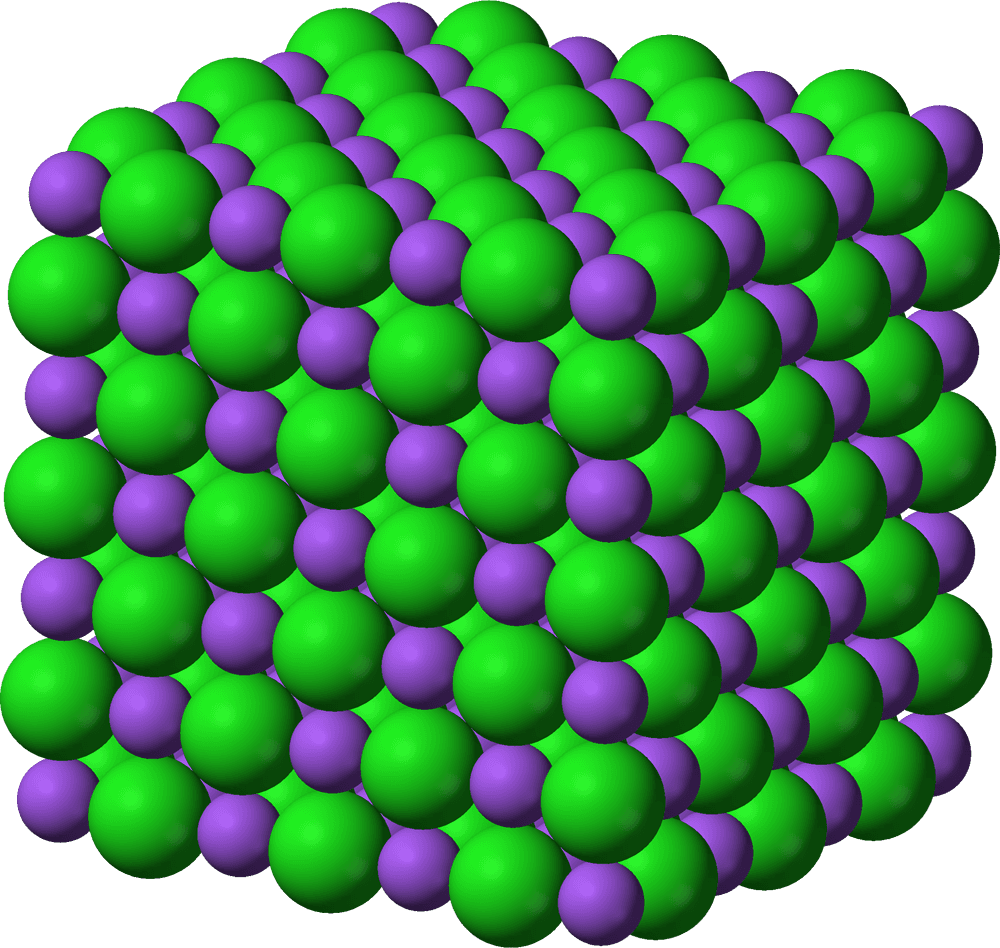
Image: Benjah-bmm27 (talk · contribs), Public domain, via Wikimedia Commons
Quantum cellular automaton
Can different systems exhibit the same quantum properties?
Imagine you're at a concert where everyone is using different brands of headphones to listen to the same song. Despite the brands, everyone hears the song in the same way.
In quantum physics, different materials or systems can behave similarly under certain conditions. This means they can share the same quantum properties, like the Landé g factor, even though they are not identical.
Example
Different brands of headphones (materials) can produce the same sound (quantum property) when listening to the same song (system).
Remember this
Different systems can exhibit identical quantum properties, showing universality in quantum physics.
Text adapted from Wikipedia, licensed under CC BY-SA 4.0.
Related concepts
Quantum Hall effect
Hall resistance Rxy is quantized in units of e²/h
universality means in phase transitions
Why do ice cubes vanish in a glass of water?
Fractional quantum Hall effect
Hall conductance quantized at fractional values of e^2/h
the Pauli exclusion principle forbids
Can two identical particles ever share the same spot in quantum mechanics?
Electron configuration
Why can't two electrons in an atom be identical twins?
Eastin–Knill theorem
No quantum error correcting code can have a continuous symmetry acting transversely on physical qubits
Swipe through 100 ML concepts daily
Open Pocket Polymath