Penrose-Hawking singularity theorems predict gravitational singularities under certain conditions
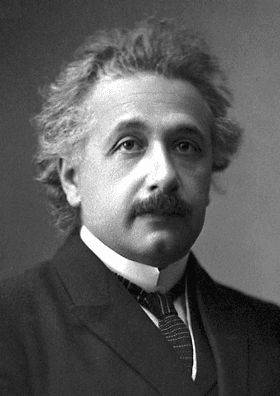
Image: Possibly Herman Mishkin, Public domain, via Wikimedia Commons
Penrose–Hawking singularity theorems
Penrose-Hawking singularity theorems predict gravitational singularities under certain conditions
The Penrose-Hawking singularity theorems are significant results in general relativity that predict the inevitability of singularities under specific conditions. Penrose's theorem focuses on black hole formation, while Hawking's theorem addresses the Big Bang singularity. These theorems demonstrate that singularities are a robust prediction of general relativity.
Example
In the context of black holes, the Penrose singularity theorem predicts that under certain conditions, such as the presence of sufficient mass and energy, a black hole will inevitably form, leading to a singularity at its core.
Remember this
Understanding these theorems is crucial for advancing our knowledge of the universe's most extreme conditions and the fundamental nature of spacetime.
Text adapted from Wikipedia, licensed under CC BY-SA 4.0.
Related concepts
Mass–energy equivalence
E=mc²
Criticism of the theory of relativity
Michelson-Morley experiment null result
Goldstone boson
Goldstone theorem states every spontaneously broken continuous symmetry produces a massless boson
Riemannian geometry
Riemannian geometry is essential for understanding curved spacetime
Differential geometry
Can geometry predict the universe's secrets?
Theory of everything
Can there be more to reality than we see?
Swipe through 100 ML concepts daily
Open Pocket Polymath