Is fairness always about equal outcomes?
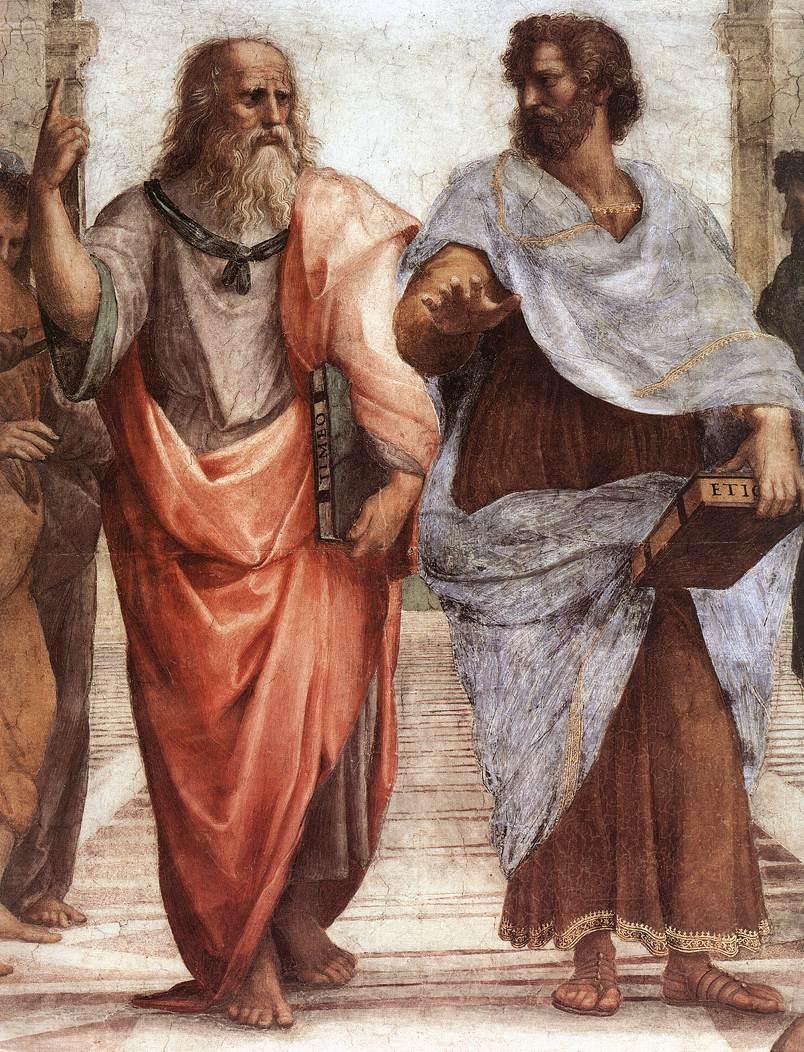
Image: Raphael, Public domain, via Wikimedia Commons
Moral development
Is fairness always about equal outcomes?
Imagine you're organizing a school lunch where students can choose between pizza and salad. Some students prefer pizza, while others prefer salad. You want to make sure everyone is happy with the choices available.
Fairness means giving everyone what they need to be happy, not just splitting things evenly. It's about understanding everyone's preferences and making sure each person gets what they value most.
Example
If half the students love pizza and the other half loves salad, giving everyone half pizza and half salad might not make them happy. Instead, ensuring there's enough pizza and salad for everyone to enjoy their preferred choice is fairer.
Remember this
Fairness is about meeting people's needs and preferences, not just dividing resources equally.
Text adapted from Wikipedia, licensed under CC BY-SA 4.0.
Related concepts
Business ethics
Can ethics be more than just rules?
A Theory of Justice
Nozick's entitlement theory argues against Rawls — redistribution violates individual rights
Rawls' difference principle says
Rawls' difference principle states: Inequality is just if it benefits the least advantaged
Emmanuel Levinas
Levinas argues that ethics precedes knowledge
Immanuel Kant
Kant separates duty from inclination to determine moral worth
Axiological ethics
Max Scheler's material value ethics opposed Kant's purely formal ethics
Swipe through 100 ML concepts daily
Open Pocket Polymath