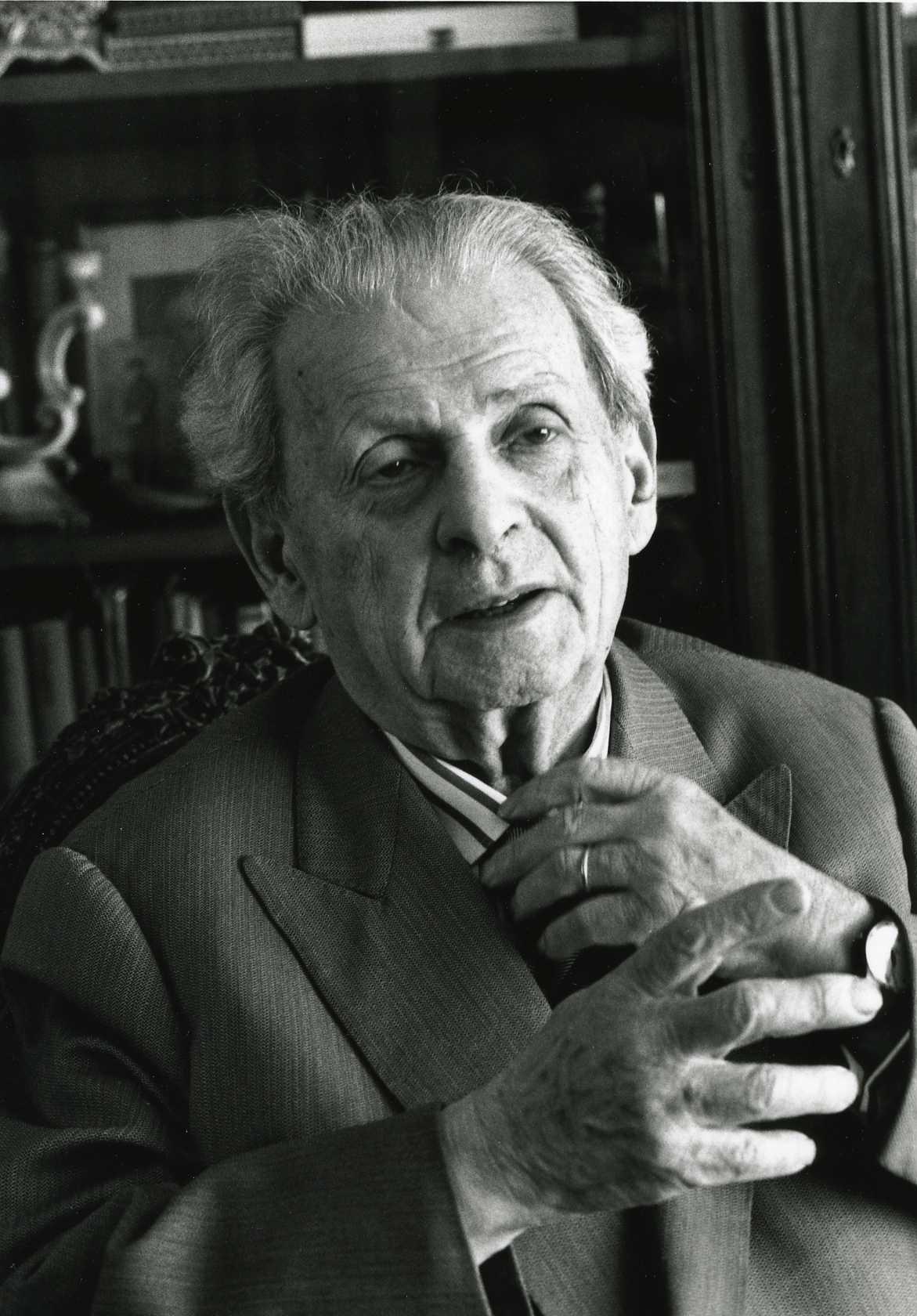
Levinas argues that ethics precedes knowledge
Emmanuel Levinas
Levinas argues that ethics precedes knowledge
Levinas posits that our primary ethical responsibility is to the Other before any knowledge is acquired. This foundational ethical responsibility shapes our understanding of the world and ourselves. Levinas emphasizes that encountering the Other initiates an ethical demand that precedes any cognitive grasp of reality.
Example
Imagine encountering a stranger in distress; our instinctual response is to help them before asking questions or understanding their situation.
Remember this
Levinas's perspective highlights the primacy of ethical responsibility in human interactions, challenging the traditional prioritization of knowledge.
Text adapted from Wikipedia, licensed under CC BY-SA 4.0.
Related concepts
The Ethics of Ambiguity
Simone de Beauvoir's Ethics of Ambiguity challenges Sartre's Being and Nothingness
Philosophy of Friedrich Nietzsche
Nietzsche developed his philosophy in the late 19th century
Two Dogmas of Empiricism
Quine's essay attacked two central aspects of logical positivism
Axiological ethics
Max Scheler's material value ethics opposed Kant's purely formal ethics
Business ethics
Can ethics be more than just rules?
Doctrine of the Mean
Aristotle's doctrine of the mean posits virtue as a balance between excess and deficiency
Swipe through 100 ML concepts daily
Open Pocket Polymath