Can a puzzle have missing pieces we can't see?
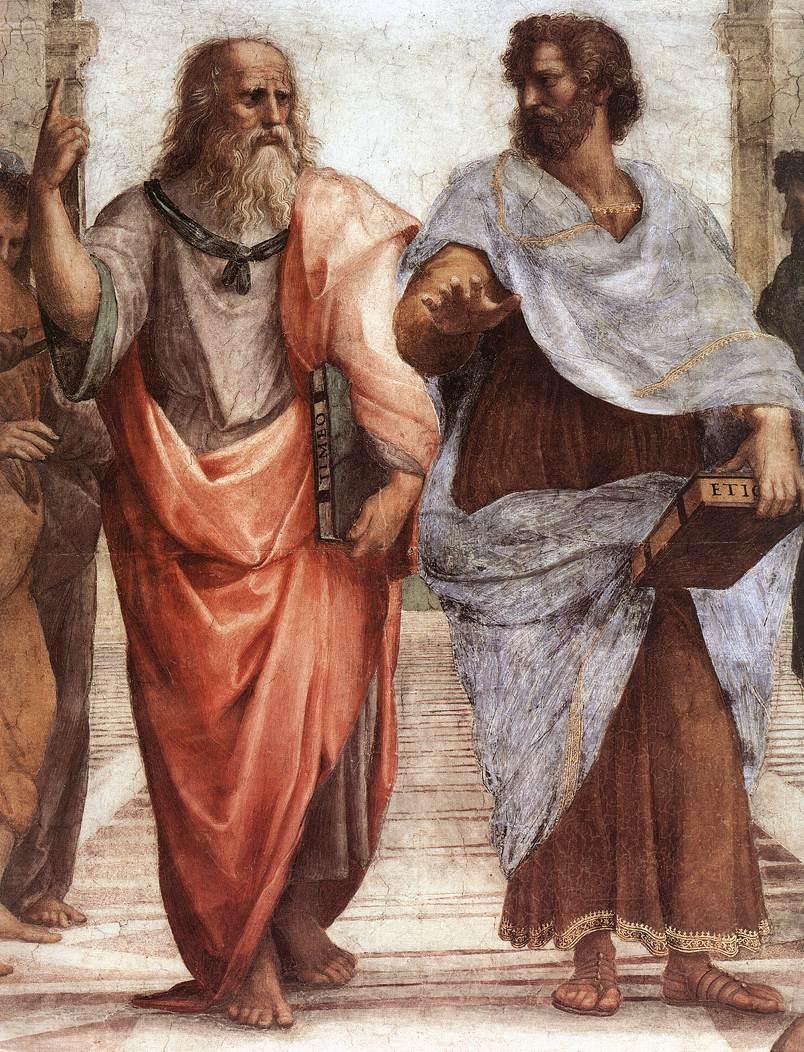
Image: Raphael, Public domain, via Wikimedia Commons
Gödel's incompleteness theorems
Can a puzzle have missing pieces we can't see?
Imagine you're trying to finish a puzzle with a friend, but you realize there are pieces that you can't find, no matter how hard you search.
Gödel's incompleteness theorems show that in certain puzzles (formal systems), there are truths (pieces) that can't be found (proven) within the rules of the puzzle.
Example
You're searching for a piece that fits perfectly, but it's missing, even though you know it should be there.
Remember this
Some puzzles have missing pieces that we can't solve, no matter how well we understand the rules.
Text adapted from Wikipedia, licensed under CC BY-SA 4.0.
Related concepts
Foundations of mathematics
Can math ever be truly complete and consistent?
Proof of impossibility
Can a perfect square root be neatly packaged as a simple fraction?
Problem of universals
Universals question independent existence
logical positivism collapsed
Can a philosophy prove itself scientifically?
Russell's paradox
What if you find a set that defies its own rules?
Logical positivism
Logical positivism's verification principle claims only empirically verifiable statements are meaningful
Swipe through 100 ML concepts daily
Open Pocket Polymath