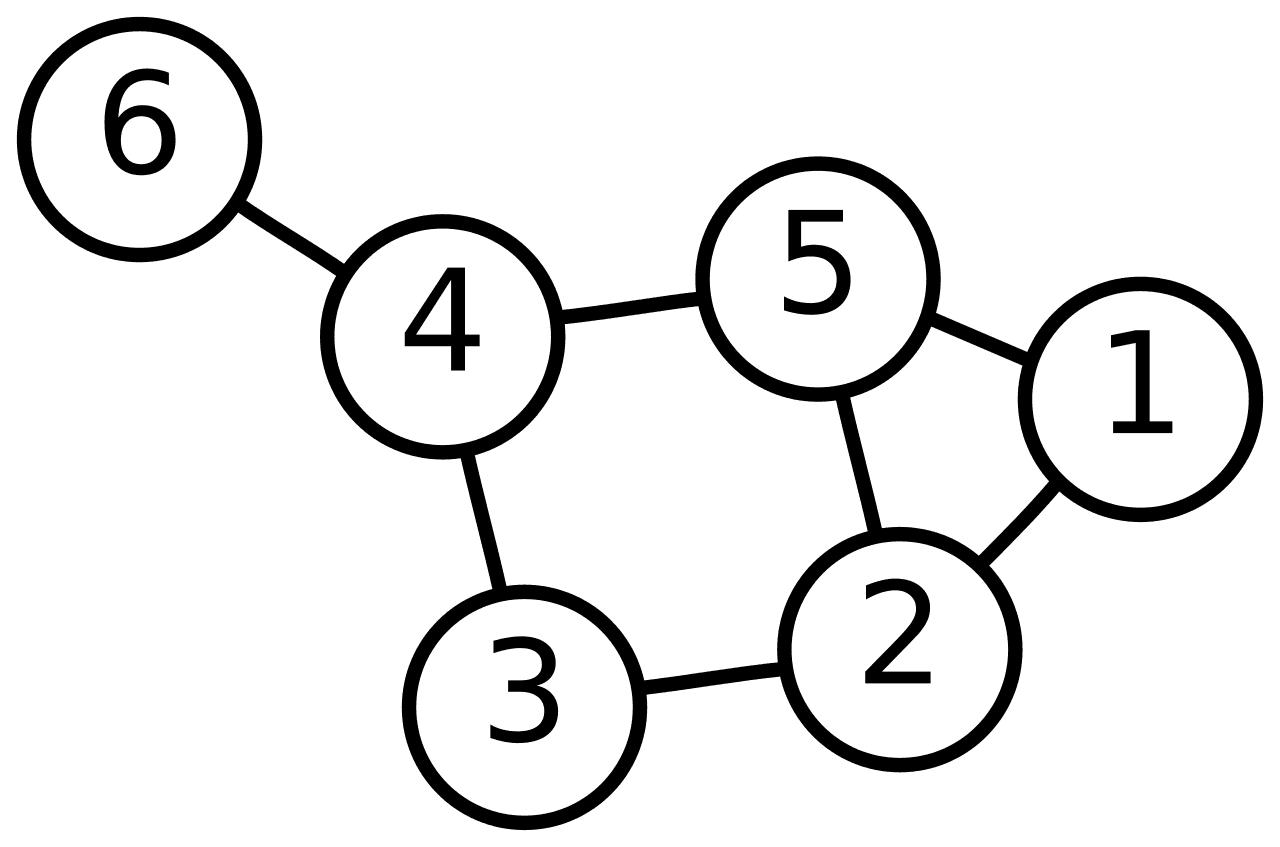
Can you count everything?
Discrete mathematics
Can you count everything?
Imagine you're counting all the apples in a big orchard. You can count them one by one, apple by apple.
Discrete functions are like counting apples. You can't have a fraction of an apple counted, just whole numbers. Discrete functions deal with things you can list one by one.
Example
You count 1 apple, then 2 apples, then 3 apples... and so on.
Remember this
Discrete functions are about counting whole, separate items.
Text adapted from Wikipedia, licensed under CC BY-SA 4.0.
Related concepts
Continuous or discrete variable
Why do some things, like time or temperature, seem smooth and flowing, while others, like counting people or cars, are in clear steps?
Foundations of mathematics
Can math ever be truly complete and consistent?
Time complexity
Why can't we always solve problems quickly?
Proof of impossibility
Can a perfect square root be neatly packaged as a simple fraction?
Gödel's incompleteness theorems
Can a puzzle have missing pieces we can't see?
Glossary of engineering: M–Z
Can calculus functions flip between smooth and abrupt?
Swipe through 100 ML concepts daily
Open Pocket Polymath