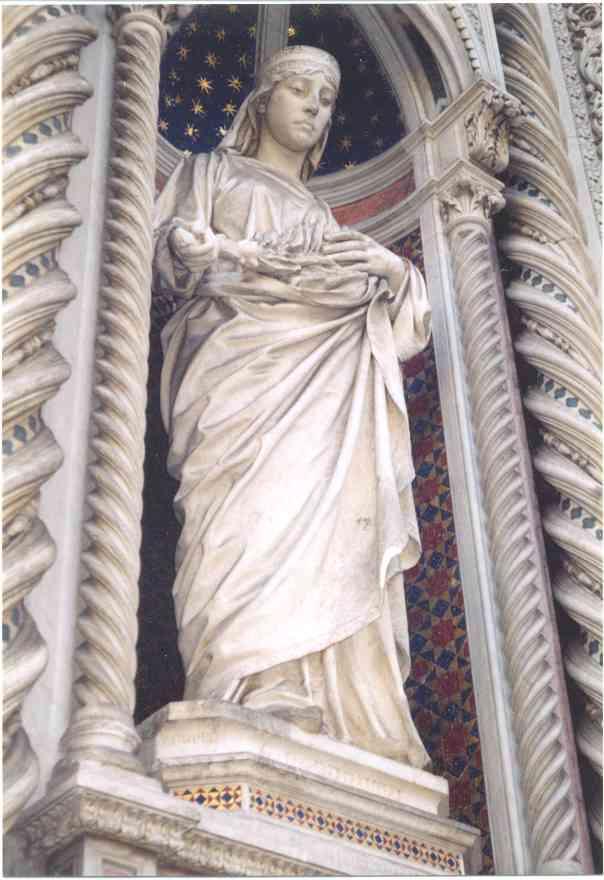
Did a young genius die too young, changing math forever?
Image: CC BY-SA 3.0, via Wikimedia Commons
Évariste Galois died in a duel at 20, the night after writing the foundations of group theory in a single letter
Did a young genius die too young, changing math forever?
Imagine you're trying to solve a puzzle where you need to figure out a secret code to unlock a treasure chest. You know the code is related to a special pattern that repeats itself infinitely.
Évariste Galois discovered a way to understand these repeating patterns, which helped mathematicians solve complex puzzles that had baffled them for centuries. This concept is known as Galois theory.
Example
If the repeating pattern in the puzzle is like the roots of a polynomial, Galois theory helps us see if we can solve it using simpler steps.
Remember this
Galois theory is the key to unlocking the secrets of complex puzzles by understanding repeating patterns.
Text adapted from Wikipedia, licensed under CC BY-SA 4.0.
Related concepts
Grigori Perelman
Grigori Perelman solved the Poincaré conjecture
Sophie Germain corresponded with Gauss under a male pseudonym and made the first major progress on Fermat's Last Theorem
Did Sophie Germain secretly solve a famous math puzzle?
Karl Popper
Karl Popper founded the Department of Philosophy at the London School of Economics and Political Science
Paul Erdős
Paul Erdős traveled with two suitcases, collaborating with 511 mathematicians on 1,500+ papers
Jorge Luis Borges went blind in his 50s but continued composing intricate labyrinthine stories entirely in his head
Did Borges write with his eyes closed?
Charles-Jean de La Vallée Poussin
Did you know math predicts how many prime numbers there are?
Swipe through 100 ML concepts daily
Open Pocket Polymath