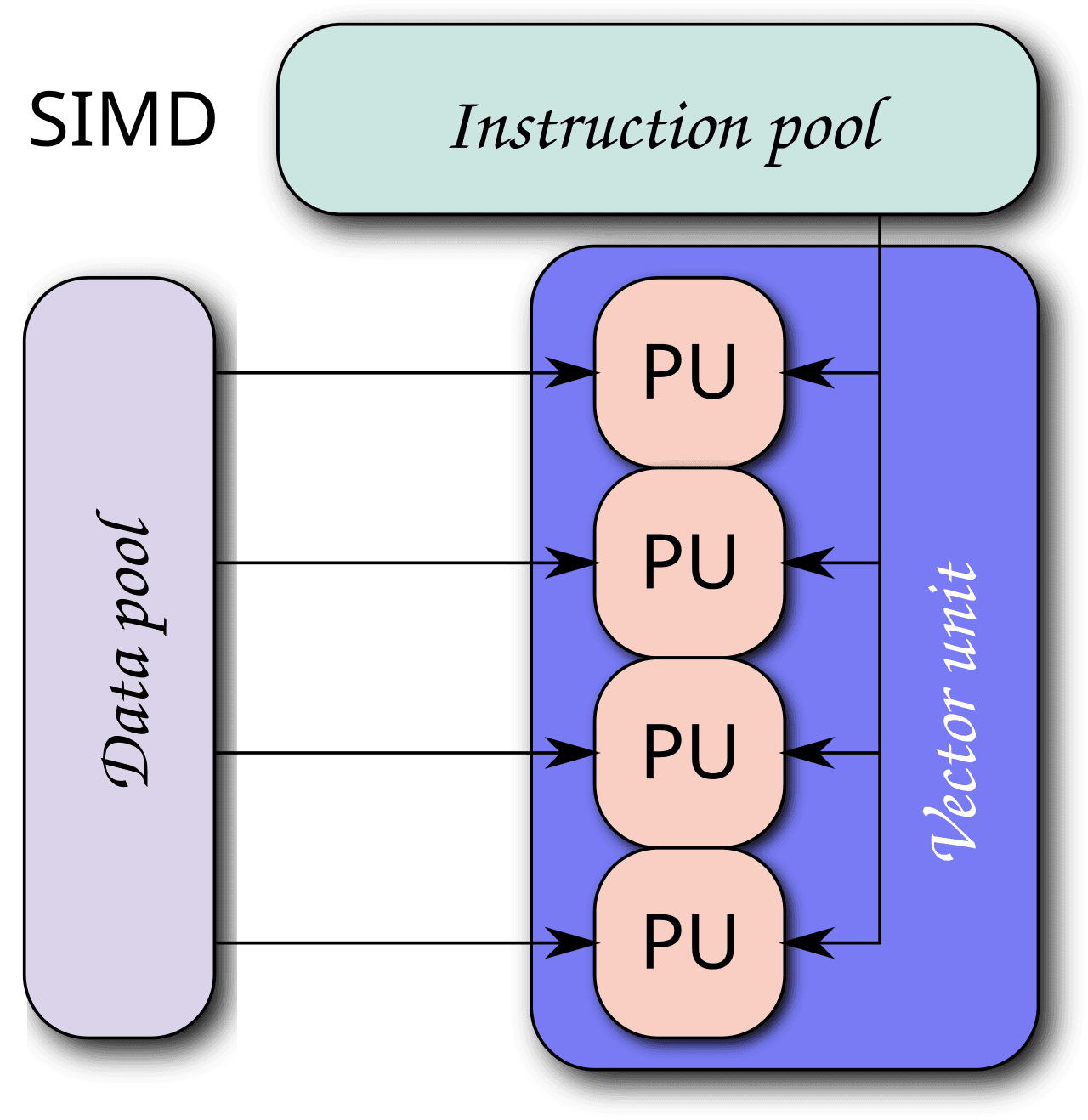
SIMD processes multiple data elements simultaneously
Single instruction, multiple data
SIMD processes multiple data elements simultaneously
SIMD stands for Single Instruction, Multiple Data, which means it allows one operation to be performed on multiple data elements at the same time. This parallel processing capability significantly speeds up tasks that can be broken down into smaller, identical operations, such as adding pairs of numbers together.
Example
In a SIMD architecture, if you have 8 pairs of numbers to add, each SIMD unit can add one pair simultaneously, completing the task much faster than traditional sequential processing.
Remember this
Understanding SIMD is crucial for optimizing performance in applications that involve large-scale data processing, such as multimedia tasks.
Text adapted from Wikipedia, licensed under CC BY-SA 4.0.
Related concepts
instruction-level parallelism (ILP) achieves: multiple operations per clock cycle
Ever wondered how computers can do so many tasks at once?
List of gay characters in animation
How can you add numbers safely in a busy computer?
fused kernels do
Why wait for a computer to finish one task before starting another?
cooperative groups enable in CUDA: flexible thread synchronization patterns
Cooperative groups enable flexible thread synchronization patterns in CUDA
Matrix multiplication algorithm
Ever wondered how computers speed up multiplying huge numbers?
__syncthreads() does in CUDA: synchronizes all threads within a block
Why do computers sometimes work faster when you click "OK"?
Swipe through 100 ML concepts daily
Open Pocket Polymath