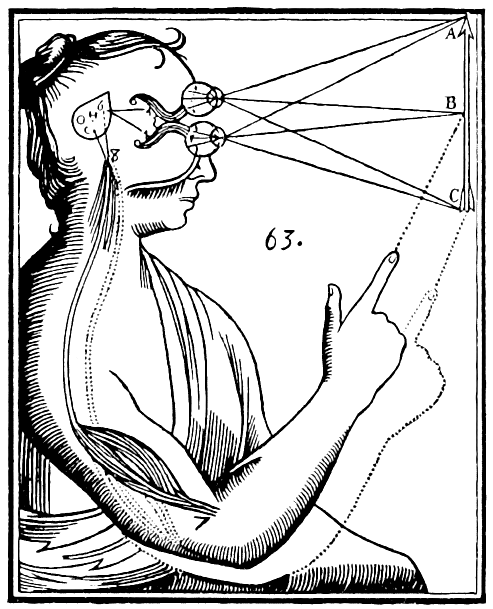
Mind–body dualism posits mental phenomena as non-physical
Mind–body dualism
Mind–body dualism posits mental phenomena as non-physical
Plato's perspective on mind-body dualism differs from Aristotle's. He believed in metempsychosis, the idea that the soul is not dependent on the physical body and can exist independently. This view suggests that mental phenomena are non-physical and can persist beyond the physical body's existence.
Remember this
Understanding mind-body dualism helps us explore the nature of consciousness and the relationship between mental and physical states. This philosophical perspective influences various fields, including psychology, neuroscience, and artificial intelligence, as it raises fundamental questions about the nature of human existence and the mind's capabilities.
Text adapted from Wikipedia, licensed under CC BY-SA 4.0.
Related concepts
Monism
Can mind and body really be one thing?
Neutral monism
Can our thoughts and bodies really be one and the same?
Functionalism (philosophy of mind)
Mental states are defined by their functional roles, not their material basis
Eliminative materialism
Eliminative materialism claims many mental states don't exist
Epiphenomenalism
Epiphenomenalism posits that consciousness is a by-product of physical brain states
Mind–body problem
Mind-body problem: immaterial thoughts vs. physical brain
Swipe through more Philosophy concepts
Open Pocket Polymath