Ever wondered how life thrives in the most extreme conditions?
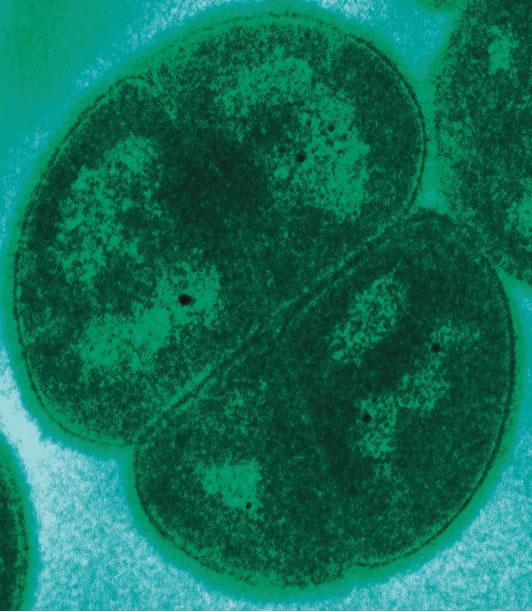
Deinococcus radiodurans
Ever wondered how life thrives in the most extreme conditions?
Imagine you're stranded on a distant planet with harsh conditions. How could you survive if the environment is extremely hot, dry, and bombarded with radiation?
Deinococcus radiodurans, a tiny but tough bacterium, can endure these harsh conditions. It's like a microscopic superhero, capable of withstanding extreme cold, drying out, and intense radiation.
Example
On this hypothetical planet, Deinococcus radiodurans could survive radiation levels that would instantly kill most other forms of life.
Remember this
Deinococcus radiodurans' resilience to extreme conditions makes it a potential candidate for exploring and surviving in extraterrestrial environments.
Text adapted from Wikipedia, licensed under CC BY-SA 4.0.
Related concepts
Tardigrades can survive in space, boiling water, and temperatures near absolute zero
Can tiny creatures survive the harshest conditions on Earth and beyond?
Agriculture in California
How can crops survive droughts better?
A single teaspoon of soil contains more microorganisms than people on Earth
Did you know a teaspoon of soil teems with life?
Honey never spoils
Edible honey preserved for 3,000 years in Egyptian tombs
Trees communicate through underground fungal networks called the 'Wood Wide Web'
Trees share nutrients via mycorrhizal fungi, forming the 'Wood Wide Web'
Footprints on the Moon (1975 film)
Moon's footprints will outlast Earthly erosion
Swipe through 100 ML concepts daily
Open Pocket Polymath