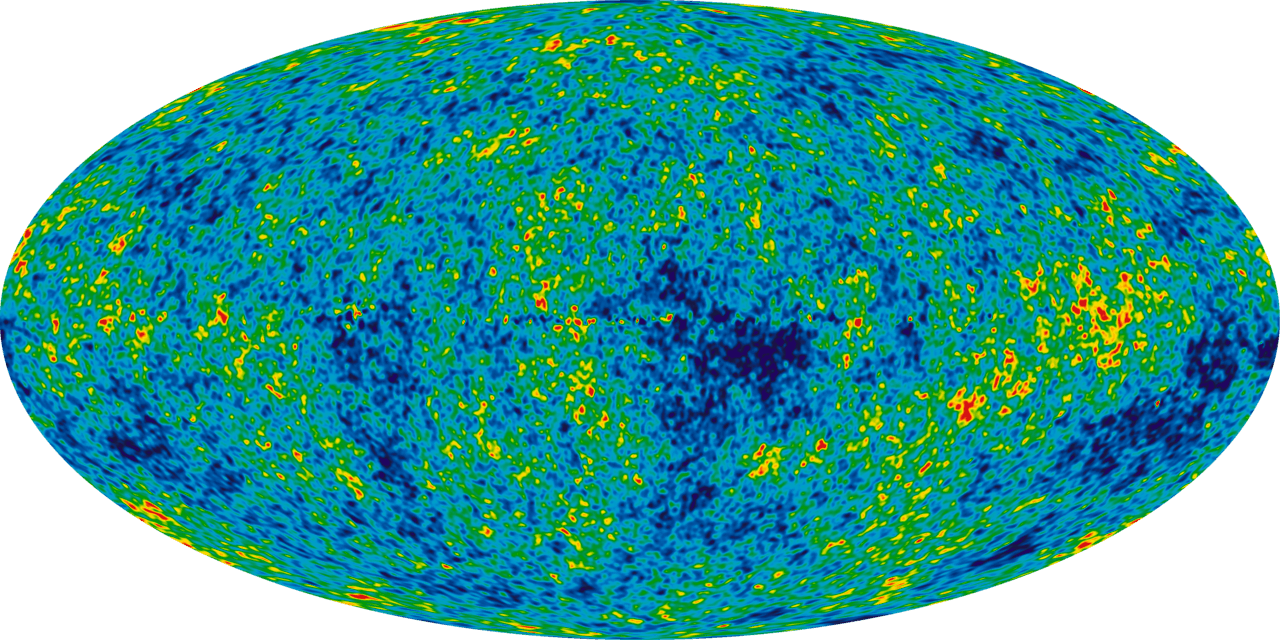
Vera Rubin's galaxy rotation curves provided the strongest early evidence that most matter in the universe is invisible
Dark matter
Vera Rubin's galaxy rotation curves provided the strongest early evidence that most matter in the universe is invisible
Vera Rubin's observations of galaxy rotation curves challenged existing theories by showing that galaxies' outer stars rotate faster than expected, implying the presence of unseen mass.
Her work suggested that galaxies contain more mass than what is visible, leading to the hypothesis of dark matter.
Rubin's findings were crucial in advancing our understanding of the universe's mass composition and the role of dark matter.
Remember this
Vera Rubin's work is fundamental in cosmology as it provided the first strong evidence for dark matter, shaping our current understanding of the universe's structure and composition.
Text adapted from Wikipedia, licensed under CC BY-SA 4.0.
Related concepts
Henrietta Swan Leavitt
Henrietta Leavitt discovered the period-luminosity relation of Cepheid variables
Edwin Hubble showed galaxies recede with a velocity proportional to their distance
Did you know galaxies are moving away from us?
The Fibonacci sequence appears in sunflower seed patterns, pinecones, and galaxy spirals
Did you know math patterns can grow like plants?
Emmy Noether
Emmy Noether proved Noether's theorem connecting symmetry and conservation laws
Albert Einstein
How does light behave around massive objects like stars?
Newton's laws of motion
Isaac Newton's Principia introduced three laws of motion and universal gravitation
Swipe through 100 ML concepts daily
Open Pocket Polymath